

At a glance
| Building | 19-storey tower block in Tower Hamlets, London: 97 flats |
| Heat supply | Central boiler plant with multiple boilers and twin primary pumps |
| Before | Combination hot water cylinders in every flat |
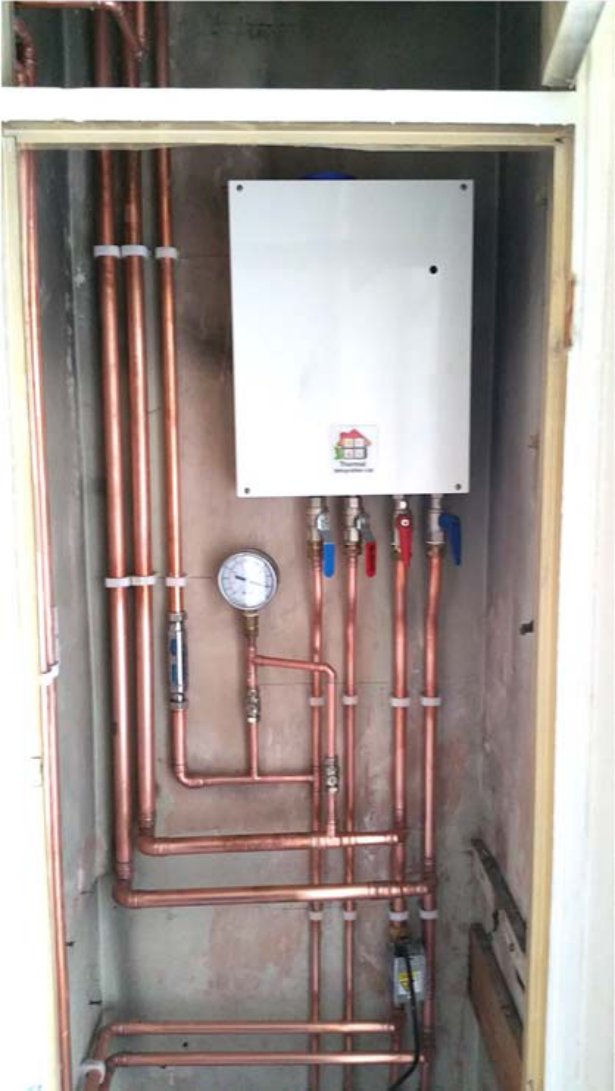
| After | SLIM HIUs with mains pressure hot water, pre-set radiator valves and thermal bypasses at the ends of laterals |
| Our role | HIU supply, factory commissioning and design support to the consultants (as Thermal Integration) |
| Completed | 2017 |
| Result | No snags and no call-outs; return risers cool to the touch |
The original system
Like many communal heating systems in London, Gordon House ran on combination hot water cylinders. They gave very low pressure hot water, were poorly insulated and overheated the cupboards and corridors around them, and returned water to the plant room only a degree or two below the flow temperature: everything a modern system tries to avoid.
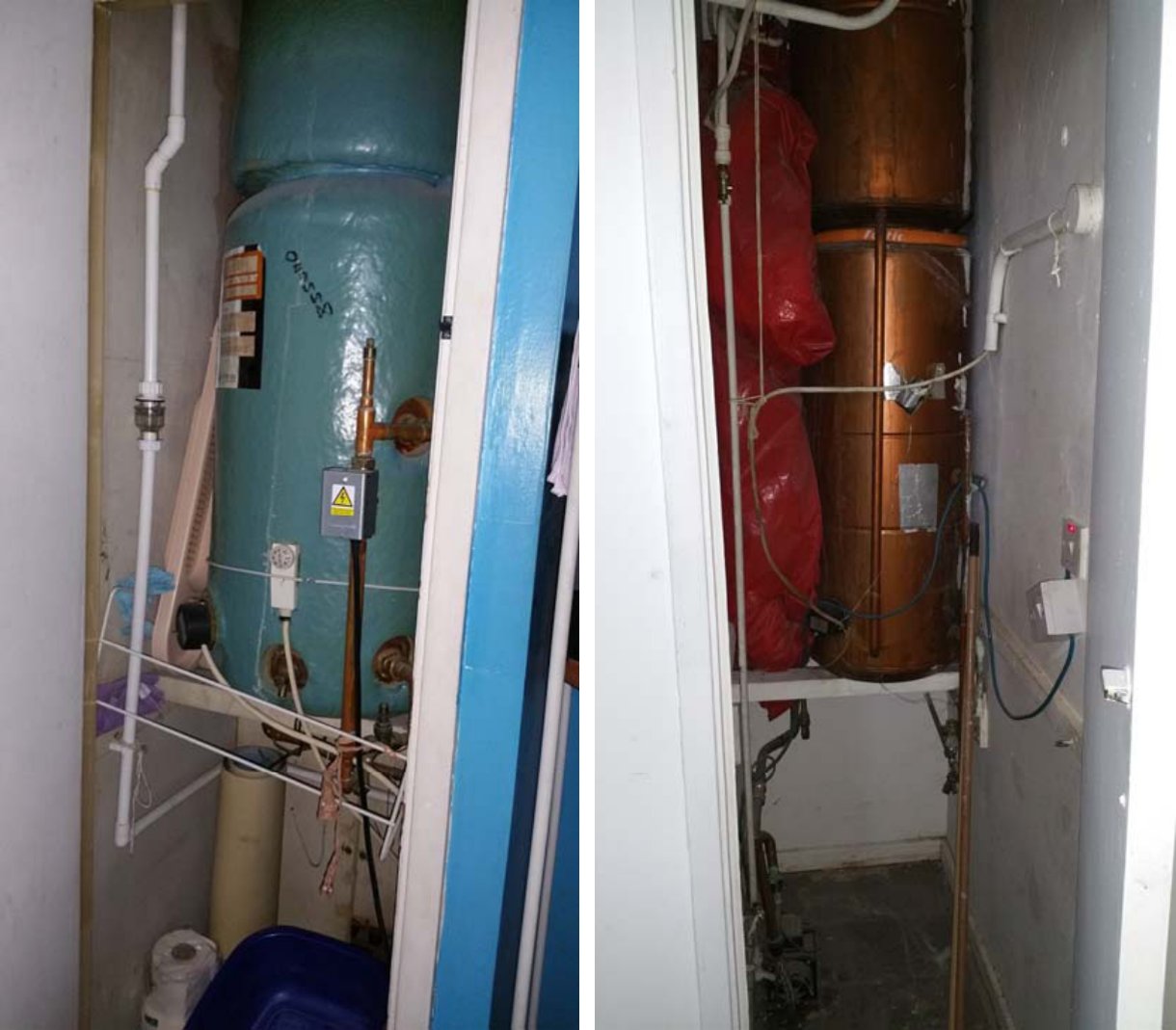
The central heating was driven directly from the network, which is naturally more efficient, but the radiator valves were not matched to the supply pressure, and unregulated bypasses were destroying the return temperatures.
HIUs instead of storage
The first plan was to fit hot water storage again, to give each flat electric backup for its hot water. The cupboards were too small, though, and new discharge pipes to Building Regulations Part G3 would have been needed throughout the block.
Heat interface units removed both problems. With twin primary pumps, several boilers and no controls on the main network pipes, local electric backup was protecting against an event that would probably never happen, while storage would certainly have meant higher return temperatures and running costs. A closer study showed that the benefits of a modern HIU system to the residents far outweighed the case for immersion backup.
The design
The SLIM HIU was the contractor's first choice, having given remarkable results on previous contracts in other boroughs. It comes from the same family as our twin-plate HIU, the DATA, which recorded a volume weighted average return temperature of 15.8 °C under the BESA UK HIU test standard, the best result recorded. The SLIM's very small footprint fits the tightest cupboards, and it cost significantly less than the storage route.
We worked closely with the consultants to refine the pipework and valve selection, so that every part of the system would work together:
- Thermal bypasses on the index runs, at the ends of the laterals, so the network stays ready without a bypass in every flat.
- Pre-settable dynamic radiator valves, guaranteeing accurate balancing without a differential pressure controller in every flat.
- Differential pressure valves on the laterals and heat meters for every flat.
Installation
The work went in two stages. First, all the pipework outside the flats was installed: the differential pressure valves on the laterals, the thermal bypasses at their ends and the heat meters. That let the boiler house be commissioned before any work started inside the flats.
The contractor then worked through the flats one at a time, with minimal disruption to services, and the simplified controls cut the time needed in each one:
- The radiator valves were pre-set before installation, so no further balancing was needed.
- With no differential pressure control inside the flats, there were no pressures to commission.
- The SLIM HIUs arrived factory commissioned to the consultant's settings, and their tamper-proof design kept them that way.
Not a single component in the flats needed setting up: as close to plug-and-play as it gets. Throughout the contract not one problem arose. The systems simply worked as designed.
The result
The building was watched closely after handover, to check that hot water and heating met their performance requirements and that the returns to the plant room were as cold as expected. The first giveaway was simply touching the return risers: they were cool. The new heat meters on the flats and the plant room confirmed low return temperatures and improved condensing efficiency at the boilers.
Residents now have proper mains pressure hot water, showering as never before. They have regained valuable cupboard space, and no longer suffer from excessive temperatures caused by heat lost from cylinders and pipework.
"Gordon House has proven itself to be a perfect case study of how to install our kit. It is rare to go through an entire contract without a single call out to assist, and the fact that there have been no snags at all can only be put down to an exemplary installation by [the contractor], who have embraced modern installation methods and trained their installers accordingly. We are very proud to have our name associated with such an efficient building."
Richard Hanson-Graville, then technical manager at Thermal Integration
What it shows
Gordon House is a model for refurbishing communal heating in tower blocks: replace storage with well-designed HIUs, put the bypasses at the ends of the laterals rather than in every flat, choose valves that balance themselves, and commission the units in the factory, so that nothing on site can drift from the design. See also Greenwich Millennium Village, where we commissioned 203 HIUs, and Harrington Place, the UK's most efficient heat network at handover.