
At a glance
| Client | Thameswey Housing |
| Site | Harrington Place (St Dunstan's), Woking |
| Homes | 147, plus a commercial load and common areas |
| Heat source | Central gas-fired energy centre, 4 × 250 kW boilers, ready to connect to a wider network |
| Storage | Two buffer stores in series, 3,000 litres in total |
| HIUs | Heatweb DATA and DATA Plus, electronically controlled, one per home |
| Network return temperature | 28 °C |
| Monitoring | Every HIU connected and reporting at 1-second intervals |
| Heatweb role | HIU design and supply, design and commissioning support, monitoring and alarms, ongoing HIU servicing |
The brief
Domestic hot water and central heating in every home come from an HIU taking heat from the building's network, fed by a central gas-fired energy centre that can also take heat from, or give heat to, a wider network in future. The network was to be designed to the latest guidance, CP1.2 and the CIBSE Guide B changes on pipe sizing and minimum velocities, and to run with the lowest return temperatures achievable.
What we did
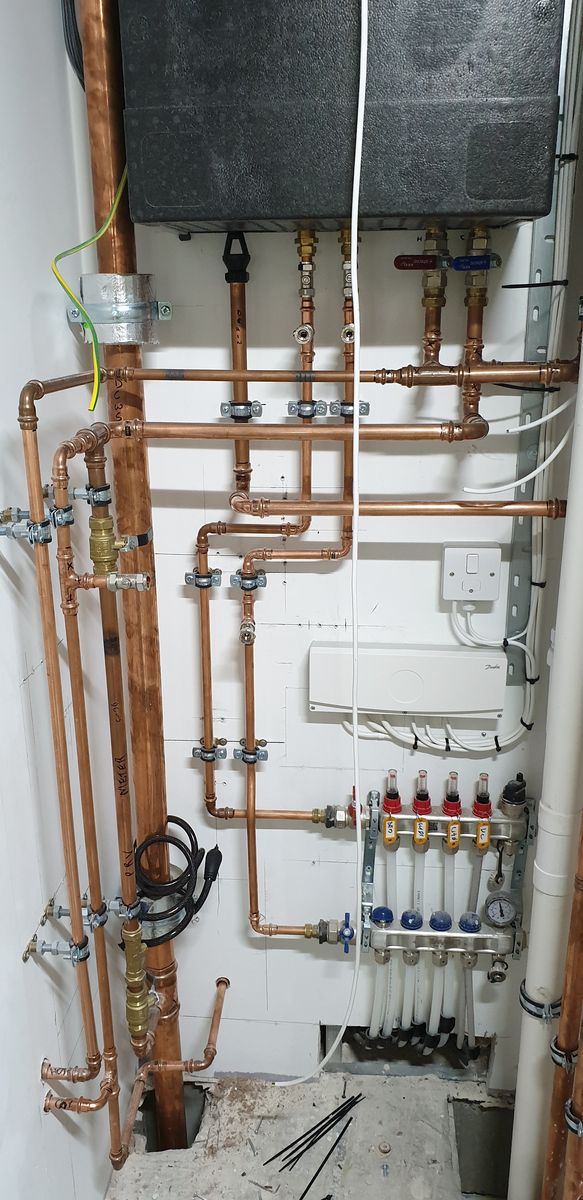
- Designed and supplied the HIUs: our DATA and DATA Plus units, with indirect central heating, instantaneous hot water, the latest plate heat exchanger technology and electronic control. The DATA was the most efficient HIU in the industry for three years running under independent BESA testing, and the selection and settings at Harrington Place put the network as close to perfect theoretical efficiency as possible.
- Supported the design and build contractors with the overall network design and with commissioning, including the energy centre, buffer stores and keep-warm strategy.
- Connected every HIU to a central management system, so each one reports every second and can be monitored, alarmed and adjusted remotely.
- Monitored and alarmed the network after handover, and we still service the HIUs today.
Network design
The energy centre follows standard guidance, with fully independent boiler controls and staged boiler sequencing from buffer store temperatures. Four 250 kW gas boilers provide the heat, with connections ready for a wider heat network.
- Load calculations: instantaneous hot water peaks were calculated using DS439, hourly loads from a combination of Institute of Plumbing (now CIPHE) sizing and Energy Saving Trust studies, and the underfloor heating loads with heat-loss software.
- Keep-warm: the latest keep-warm method, with an absolute minimum of primary water bypassed, maintains hot water response times. Thermal bypasses at strategic points keep the common supply pipes at 50 °C, and differential pressure sensors trim the central pumps.
- Storage: two buffer stores in series give 3,000 litres, with internal sparge pipes to use as much of the volume as possible.
- Pumps: circulating pumps feed the residential load, commercial load and common areas, selected to cope with low or no flow, with flow-regulated bypasses to keep a minimum flow.
- Ready for heat pumps: with average network return temperatures close to ambient, the network can be driven by heat pumps, with the gas boilers topping up supply temperatures when needed, and the surplus high-temperature heat from the standby boilers could be fed into a wider network.
Every home connected, every second
The HIU management system is built entirely in open-source software (Node-RED, with the MQTT protocol), so it is not tied to any one make of hardware.
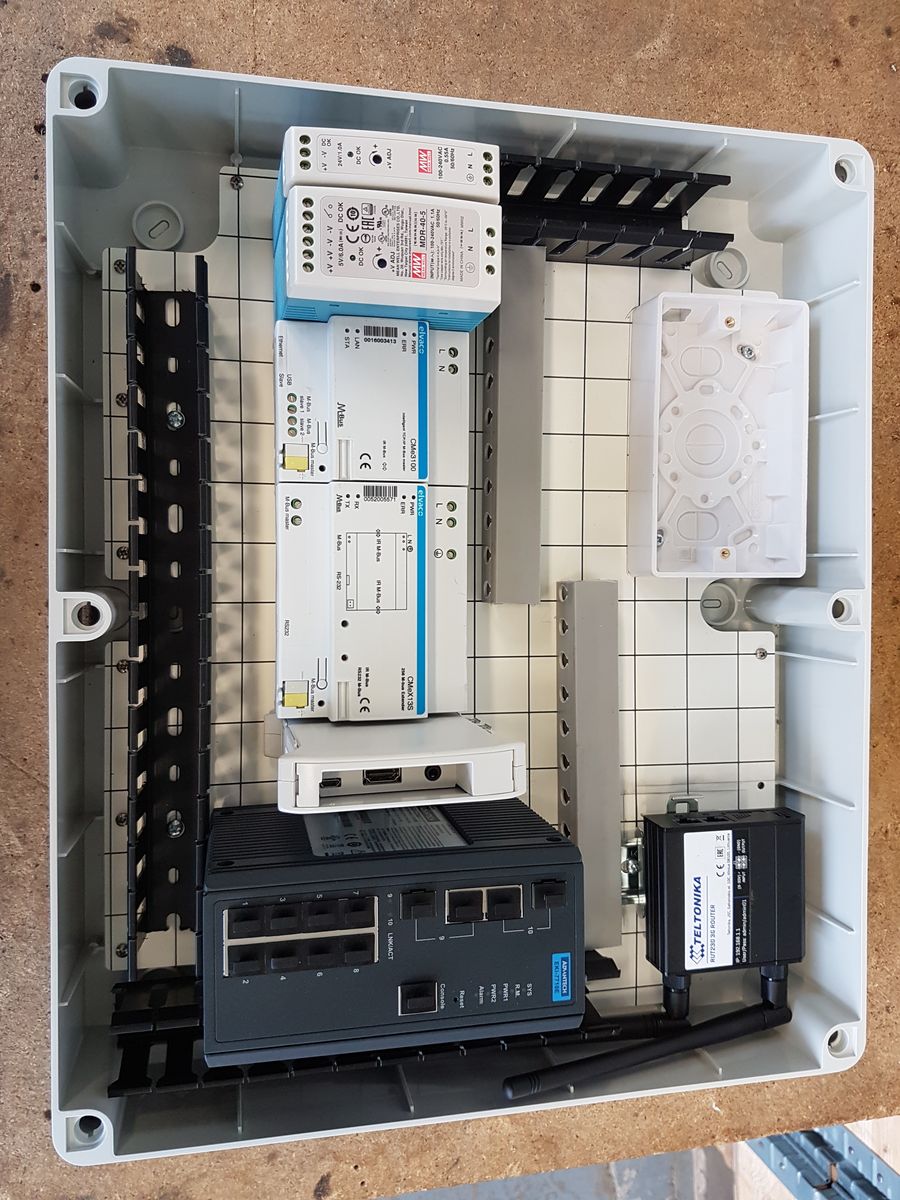
- HIU hubs on the second and eighth floors each connect eight HIUs up and down the risers over a two-wire RS485 link, and the heat meters over M-Bus. They are powered over Ethernet from switches in the network cabinets.
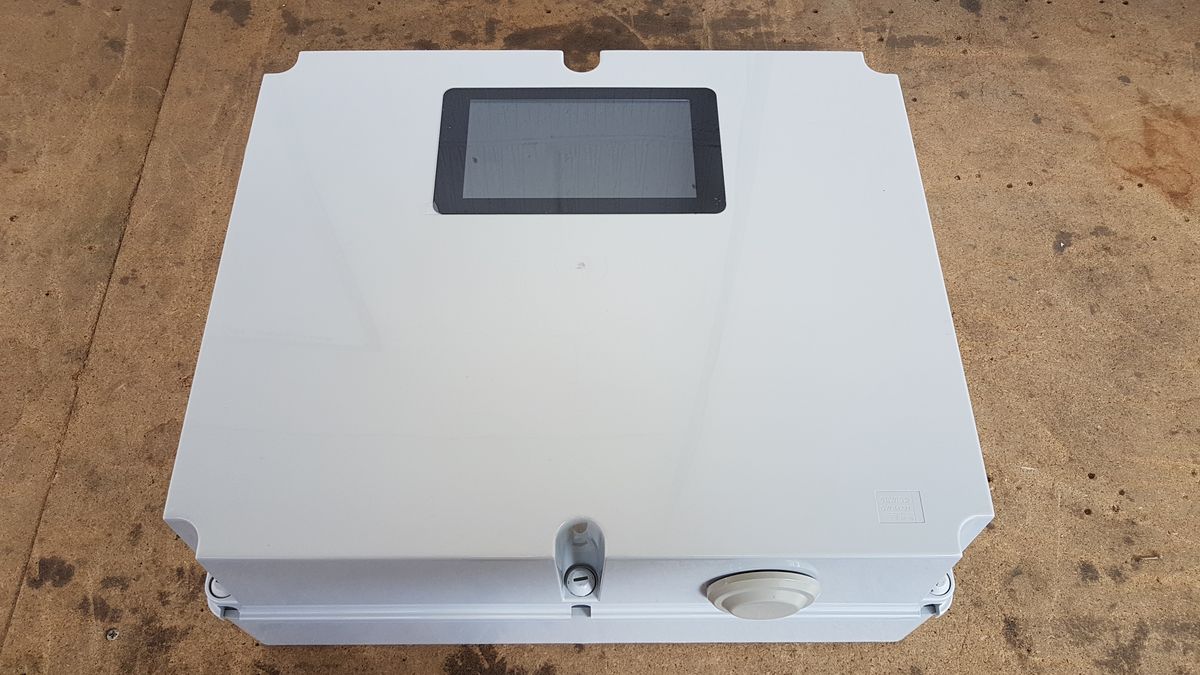
- The central hub in the energy centre holds the main MQTT server, the BMS bridge (Modbus), secure remote access (VPN), data logging and the browser dashboards, an M-Bus master for the heat meters, a GSM modem, and a touch screen that can take over any central function if a controller goes offline.
- Heat meters are ultrasonic, MID Class 2, and draw power from the M-Bus, so they can be read as often as needed without running down their batteries. The flow and return sensors in each HIU give a second set of readings to check against them, which reveals tampering or crossed sensors.
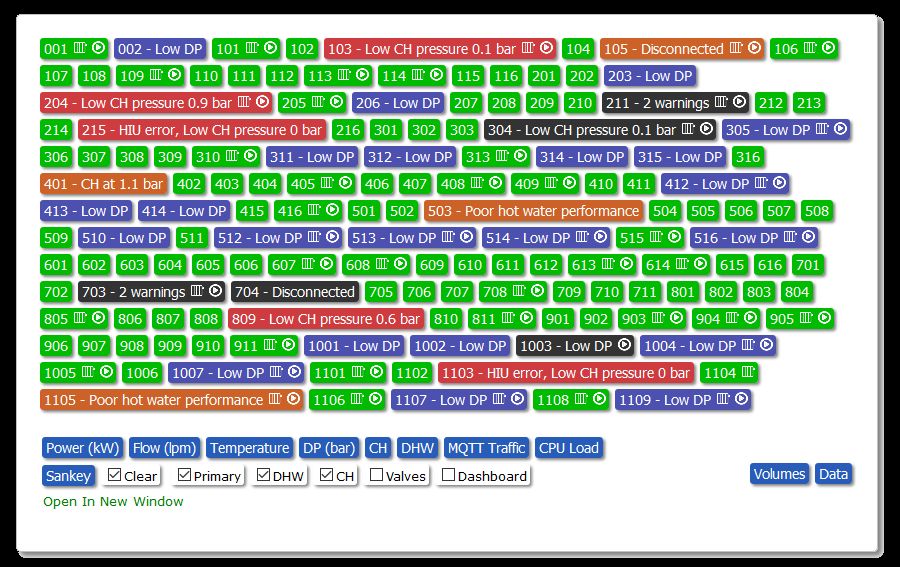
The dashboards show the status of every home at a glance, live readings from each HIU and the network load, with reports, settings and commissioning tools behind them.
Load shedding: a first for the UK
Harrington Place was the first heat network in the UK with load shedding in operation. Because every HIU is connected, the central heating loads can be managed from the centre: hot water is never interrupted (you can't ask someone not to run a tap), but central heating, which the building's thermal mass carries comfortably for a few minutes, can be paused to keep the network inside its limits.
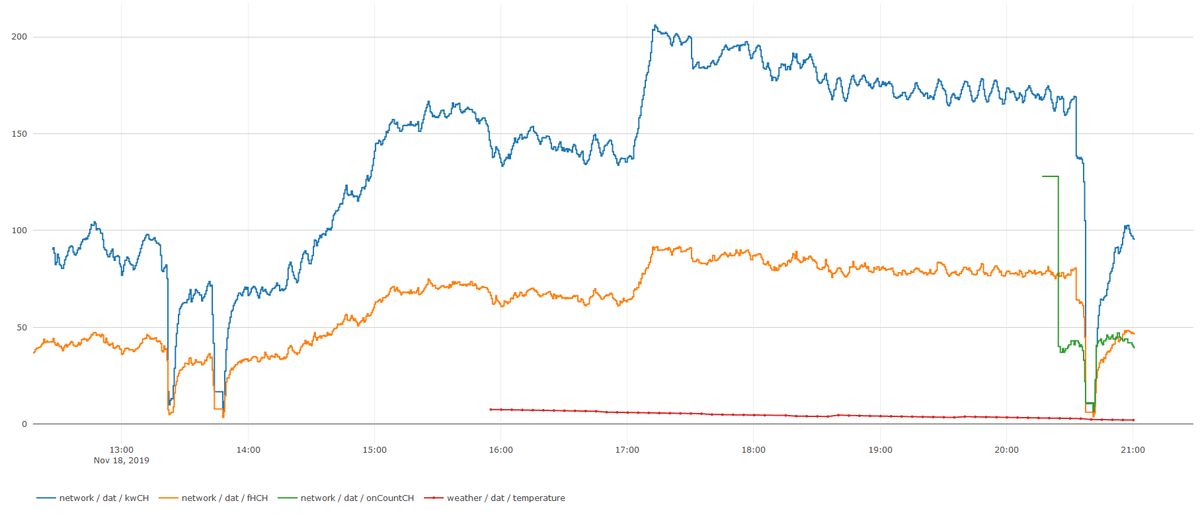
Meeting exceptional loads. Three times a day the system turned off all central heating for five minutes, so the boilers could concentrate on the hot water load and on recharging the buffer stores. Comfort was unaffected, and the network gained the equivalent of 1,500 litres of extra storage. In practice this is linked to a sensor near the top of the buffer store, so it acts only when the store is close to running out.
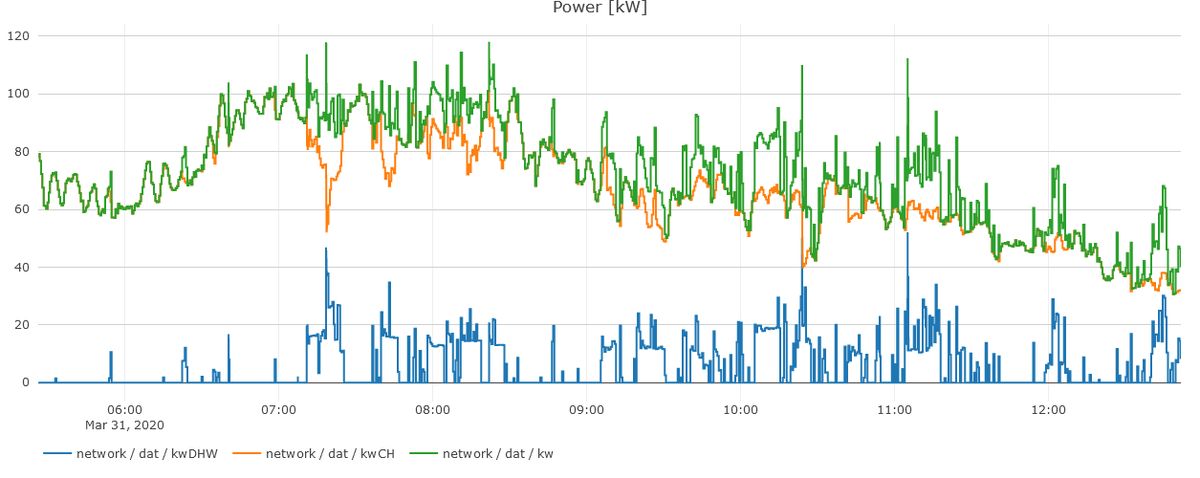
Load limiting. With a 100 kW limit set, whenever the load goes over it the system works out the excess and, within 10 seconds, pauses that much central heating, choosing the homes that are already up to temperature and will notice least. The highest load seen was about 118 kW, against an estimated 160 kW without the function.
Resilience. With redundant boilers the function rarely needs to act, but it is invaluable when a boiler fails: the network runs on the heat available and residents keep their hot water. In a complete loss of heat, central heating can be held off entirely so the stored heat is kept for hot water for several hours while the fault is fixed.
Load shedding of this kind could let networks be sized for the larger of the hot water or heating peak rather than both added together, which in the right circumstances could cut network sizing by up to 50%. More on how it works: load shedding and shifting on heat networks.
The most accurate record of tap use ever made
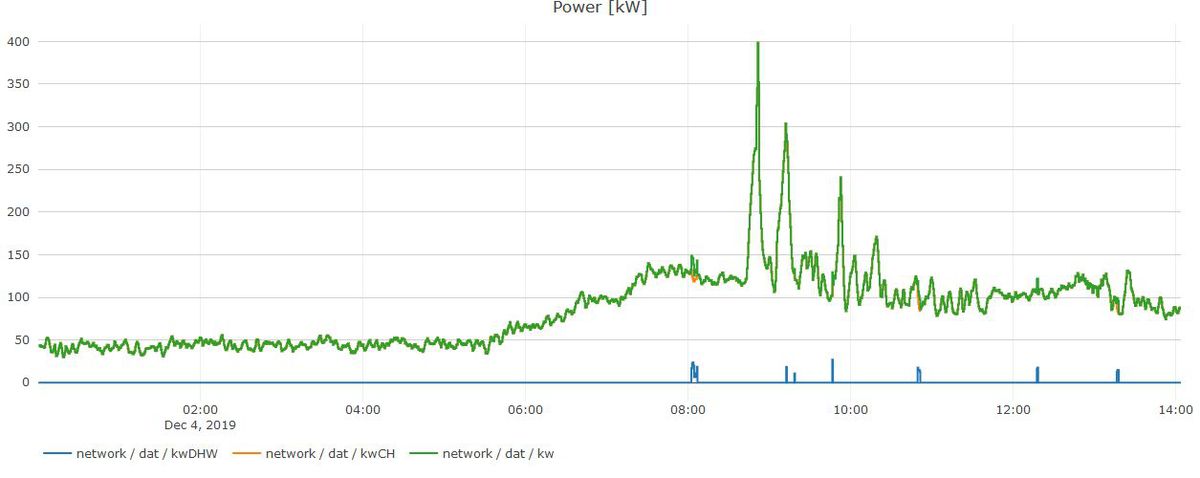
We monitored all 147 homes for more than a year, recording every HIU at one-second intervals: the most accurate record of real hot water and heating use ever captured on a UK heat network.
That data became the basis of PhD research by Niki Sahabandu at UCL's Bartlett School of Environment, Energy and Resources, on how hot water demand and diversity should shape heat network design, and of a paper submitted to the journal Building Services Engineering Research and Technology, "Informing efficient heat network design: peak demand, diversity and network sizing". Using demand profiles from 115 of the homes, the research found:
- peak demands are captured adequately at a 10-minute sampling interval, a practical benchmark for monitoring existing networks to inform new designs
- total peak demand was consistently only about 0.5 kW above the hot water demand at every level of aggregation, which questions whether design methods need to add space heating on top
- measured against widely used sizing methods, the network would be oversized by 51% to 135%, so lean, data-informed sizing could save significant capital and running costs on future networks
The result
- The UK's most efficient heat network at handover, with 28 °C network return temperatures
- The first load shedding in operation on a UK heat network
- 147 homes monitored at one-second intervals for more than a year, with alarms on every HIU
- Data that now informs heat network design research and the evidence base for sizing future networks
- An ongoing relationship: Heatweb still services the HIUs