Function
| Control Method | Fixed Temperature | Weather Compensating | Chrono Compensating (Heatweb) |
|---|---|---|---|
| Return Temperatures | High | Low | Low |
| Radiator Temperatures | High | Low. Users often complain radiators are never hot | Varied. Hot when needed. |
| Startup | Fastest | Slow | Fast |
| Setup | Set to fixed temperature | Adjust compensation curve to match property | Self adjusting, no setup |
| Towels on radiators | Stays hot, return gets hotter | Output drops | Supply temperature increases to satisfy room temperature. |
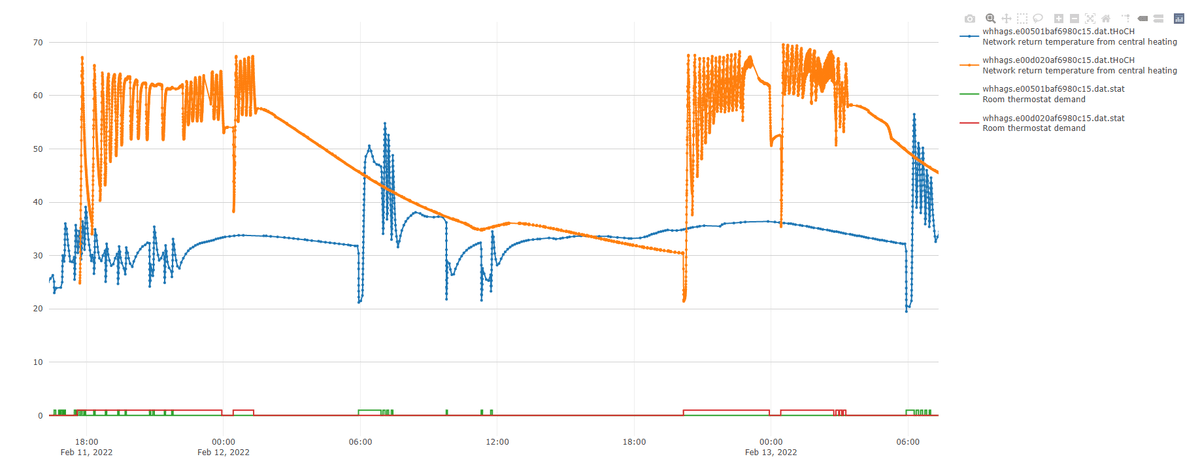
Before
Fixed setpoint results in high return temperatures and HIU limiting output on return limit.
Experimenting
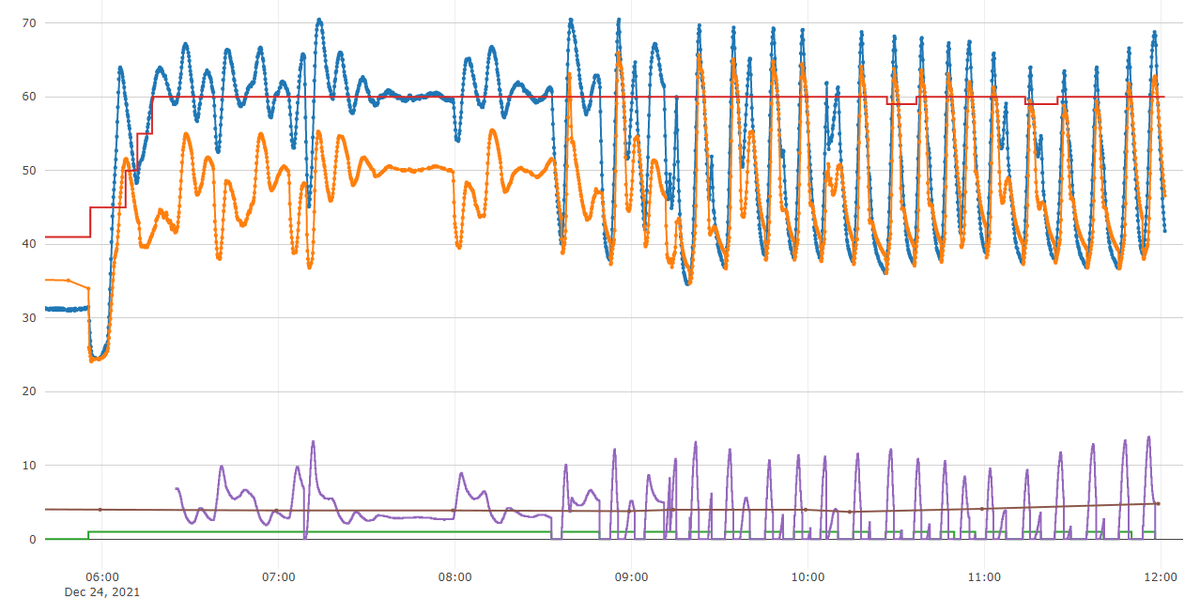
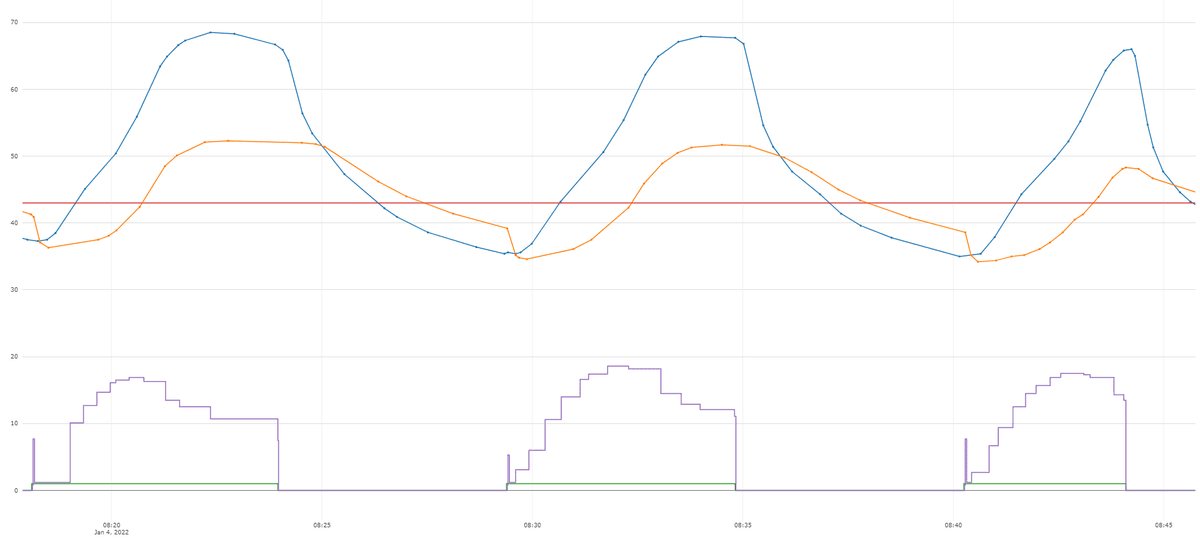
First attempts at compensating flow temperature were too slow. Time between room stat calls is too variable.
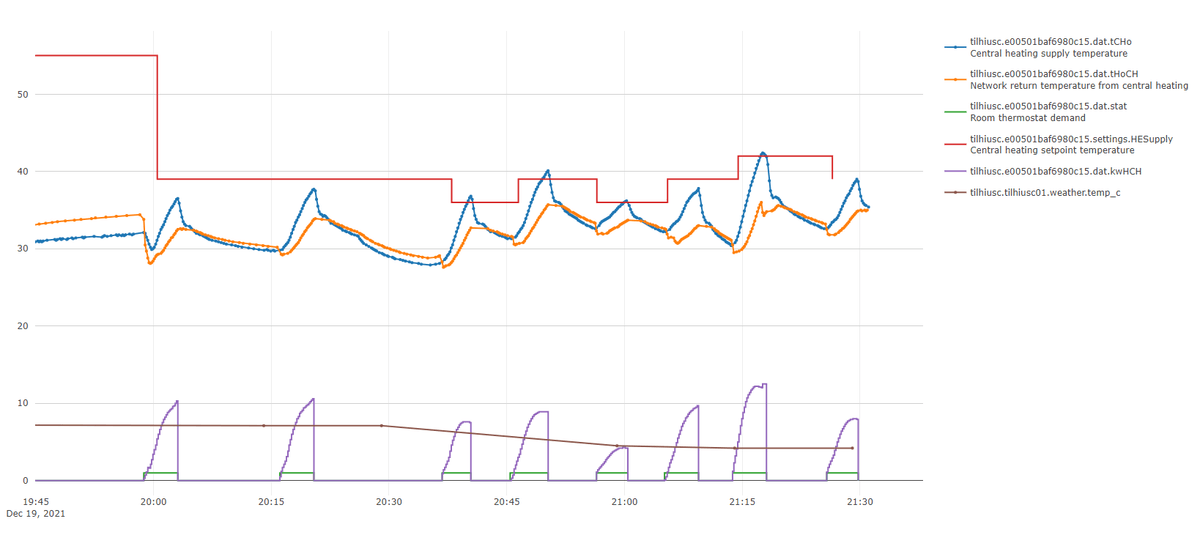
Speeding up improved this.
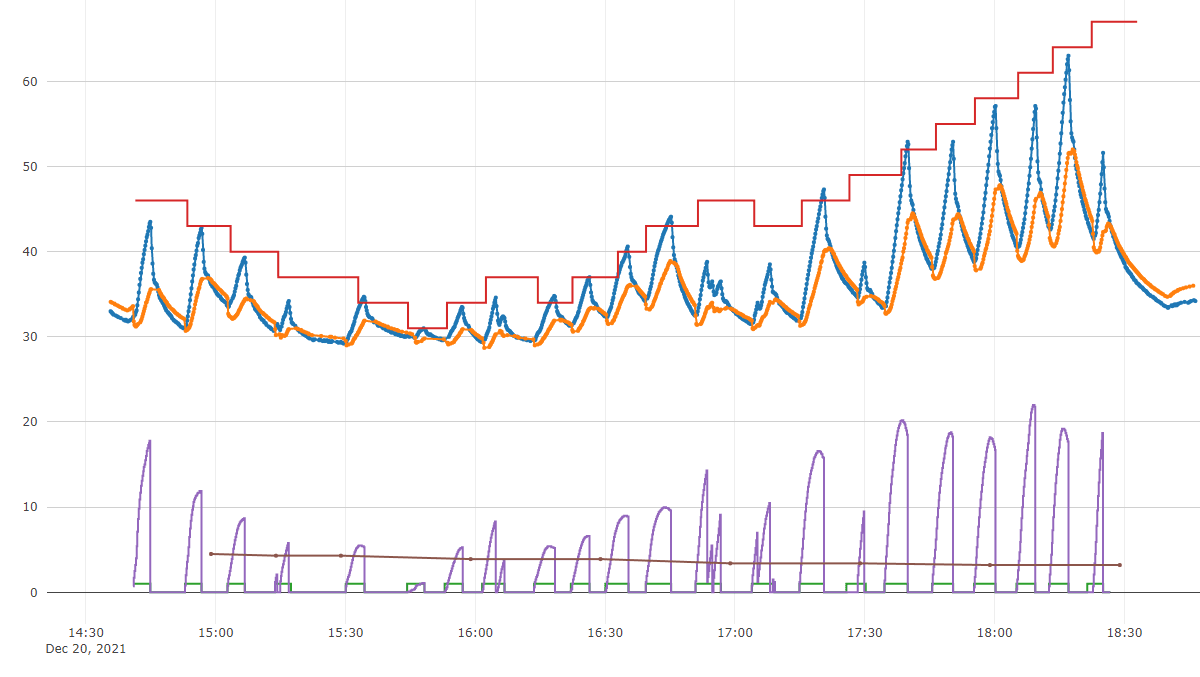
Increasing temperatures too fast results in overshoot.
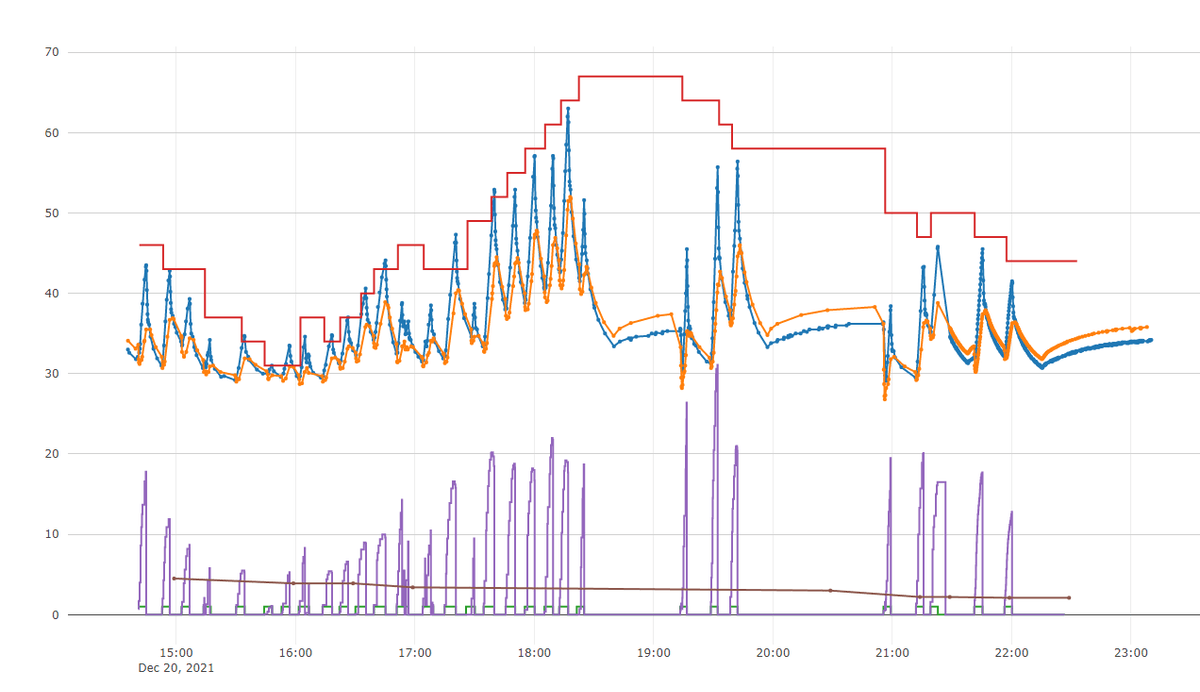
Reducing temperatures too slowly causes overshoot.
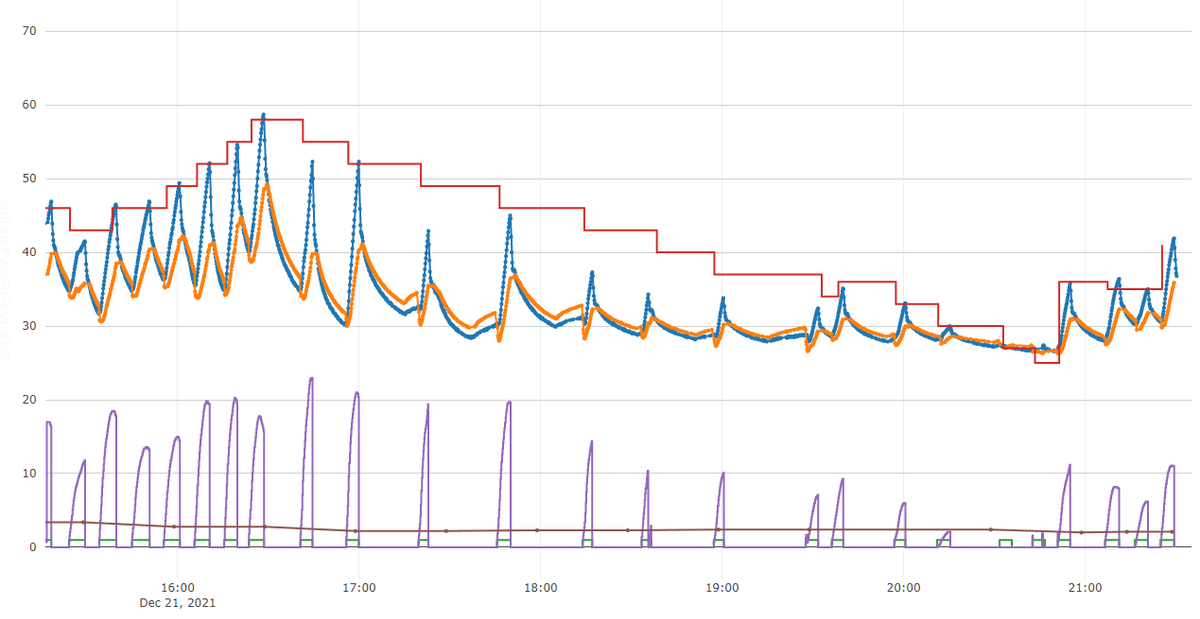
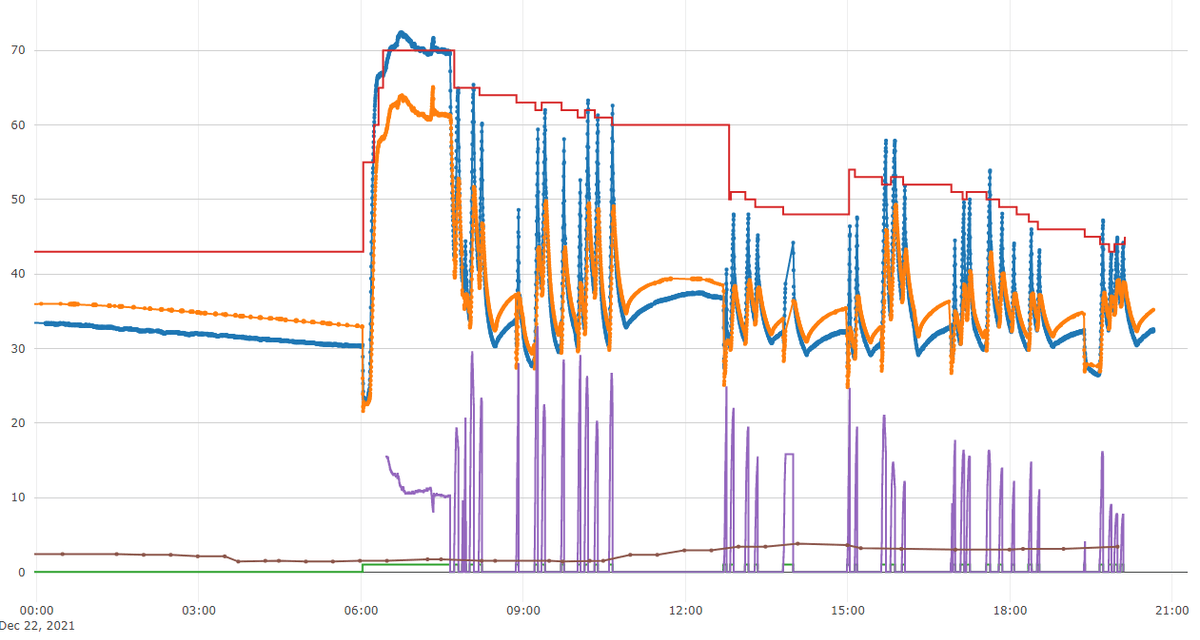
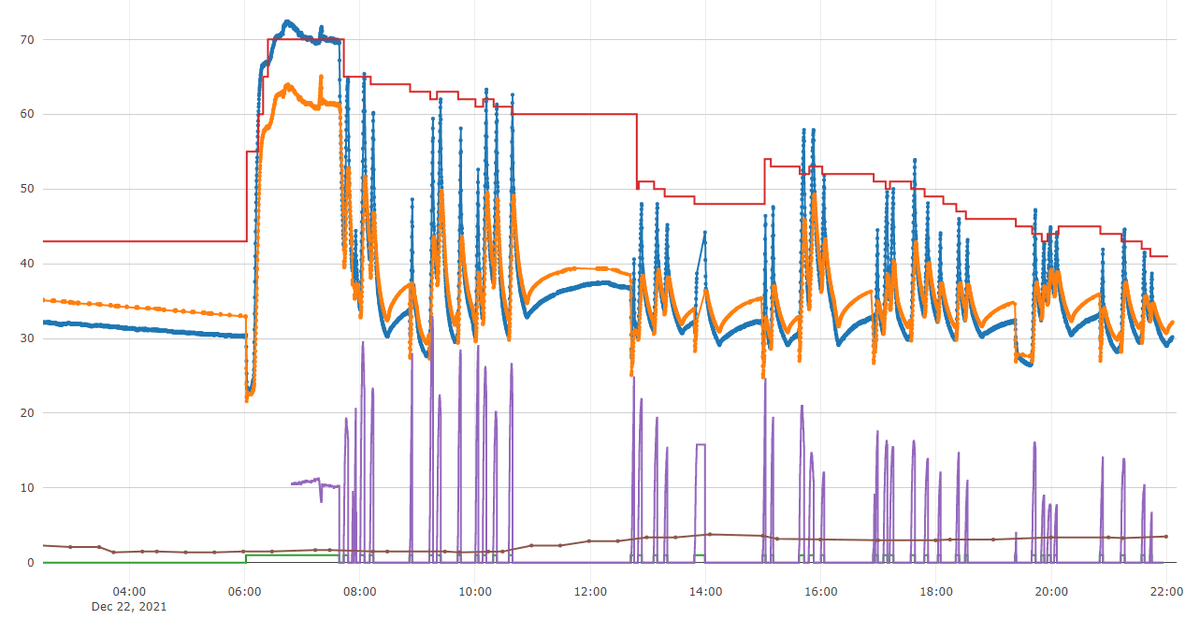
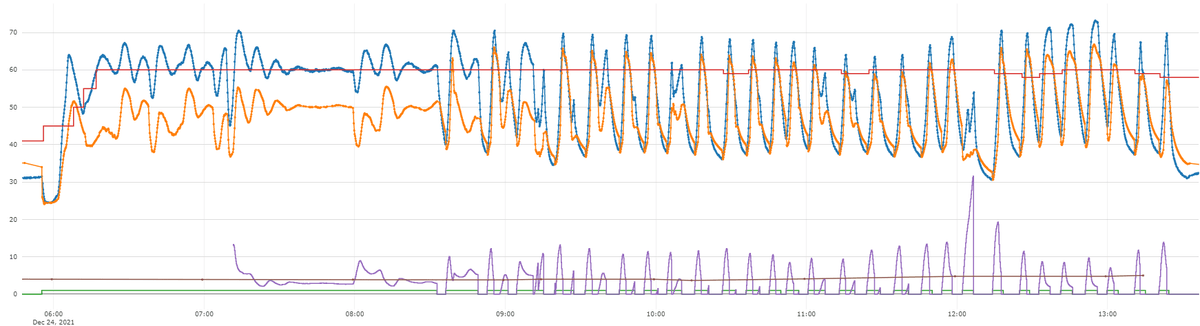
Starting to look impressive.
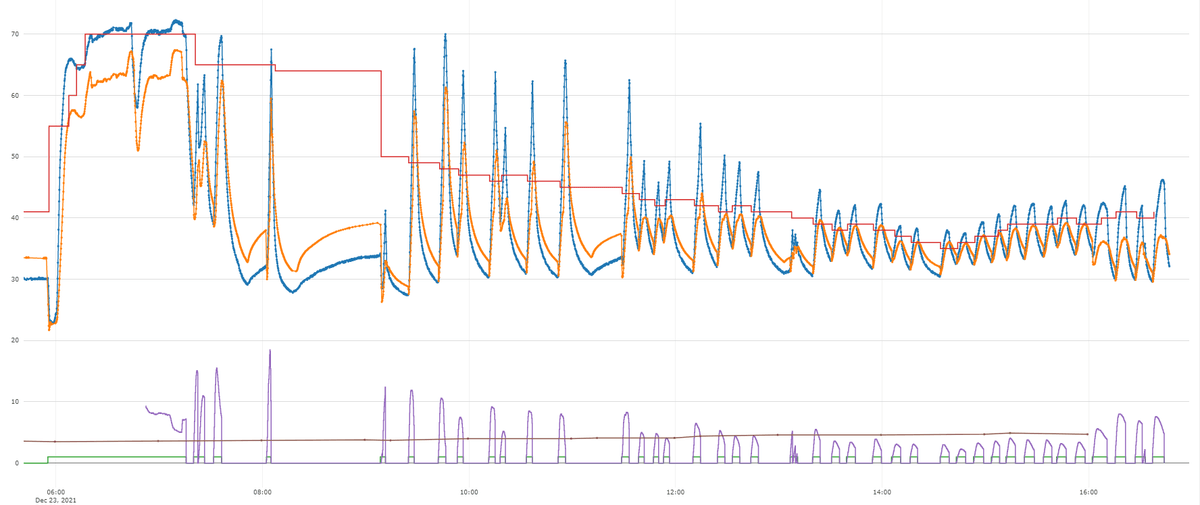
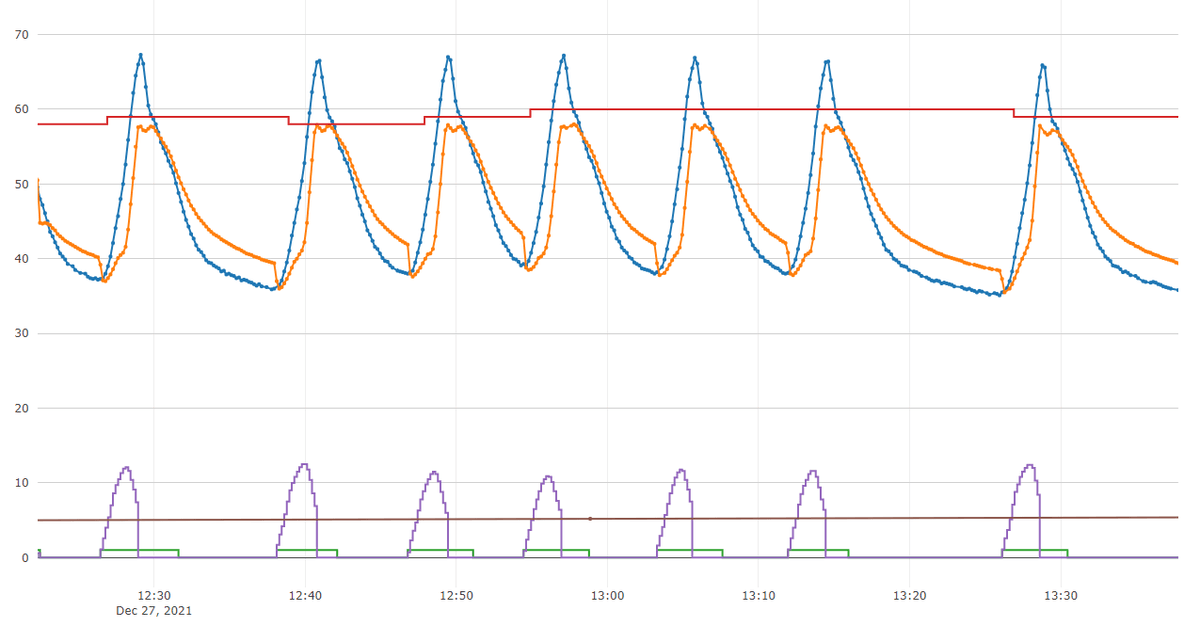
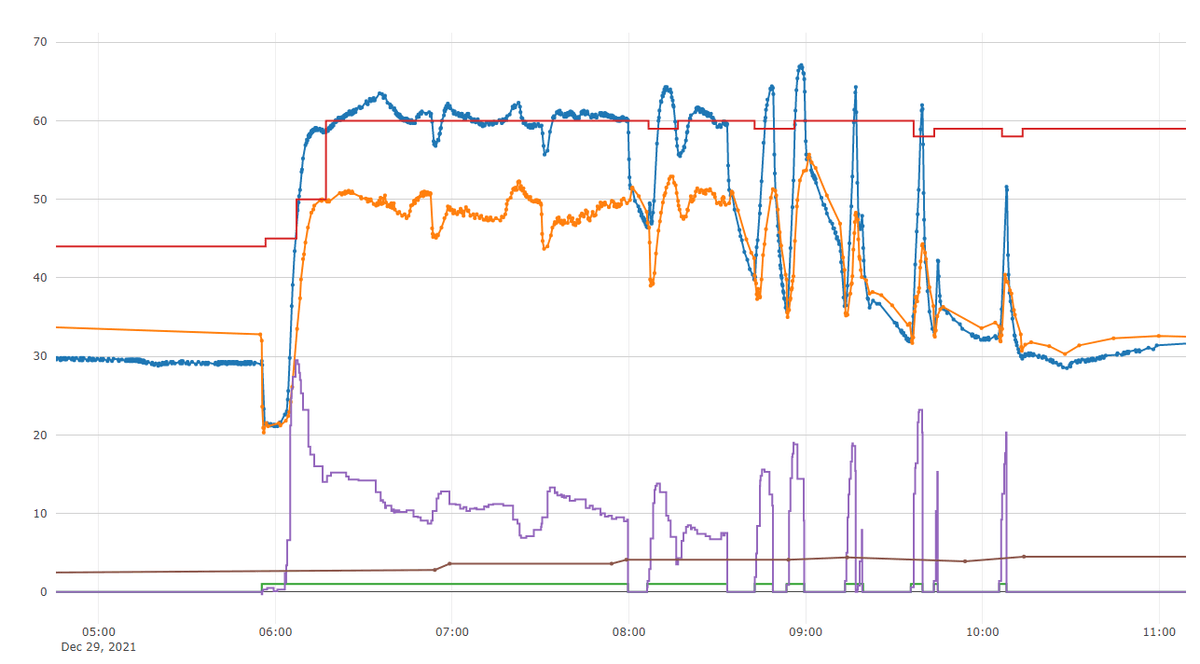
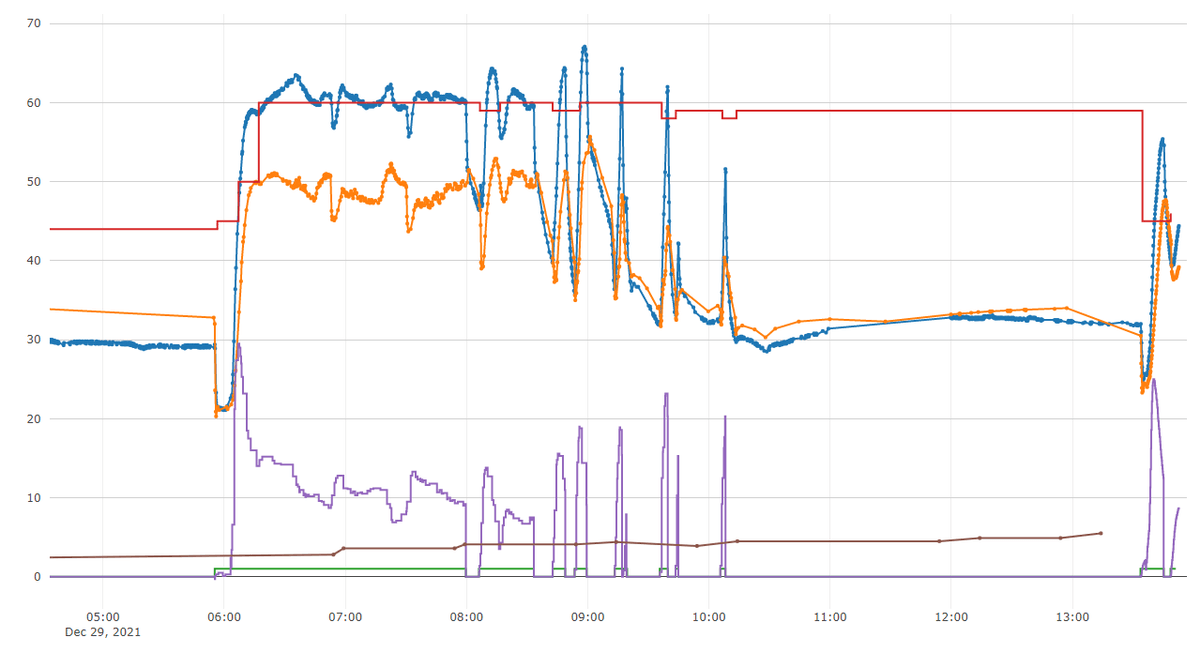
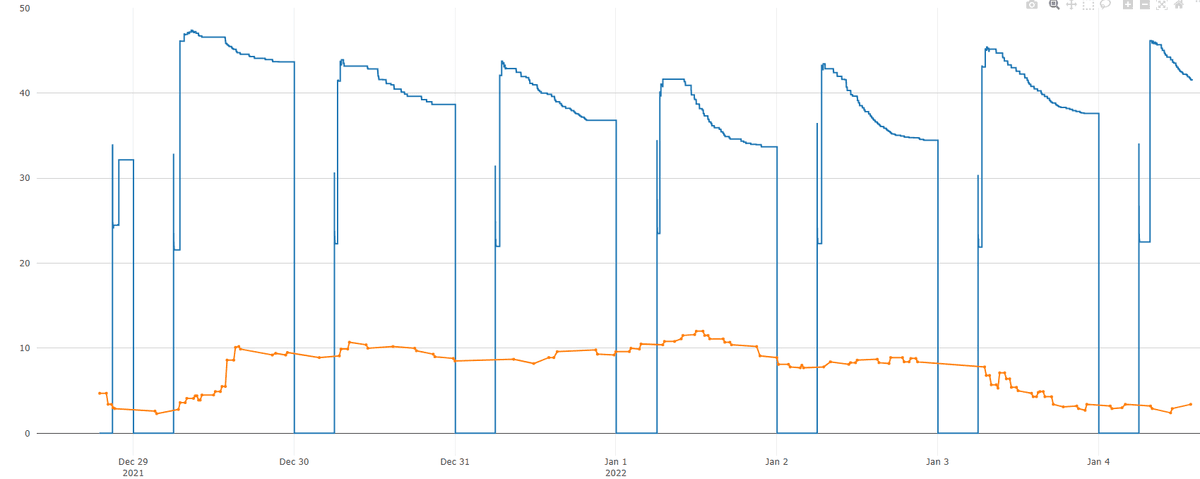
First Working Version
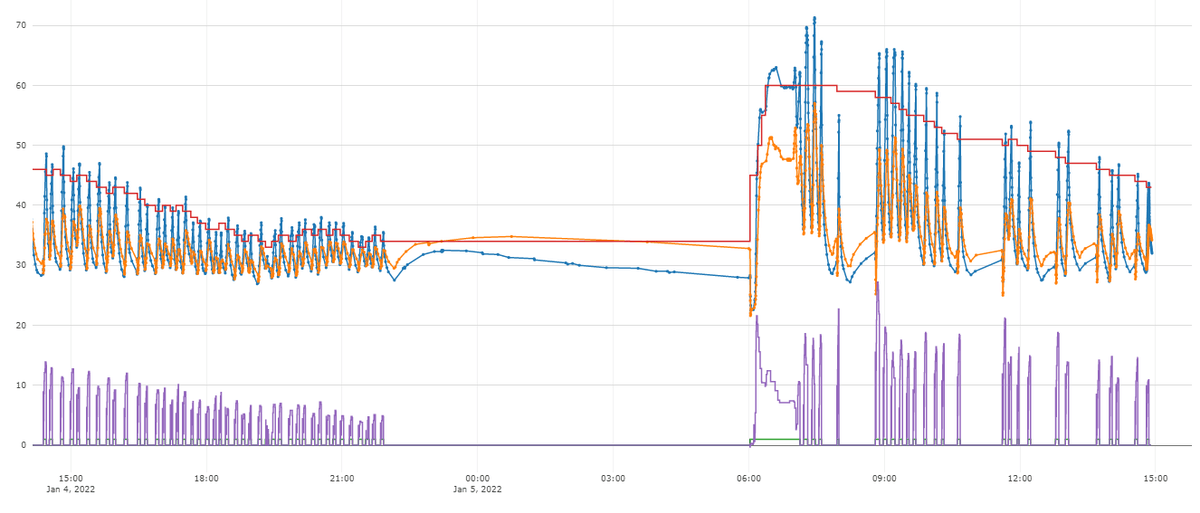
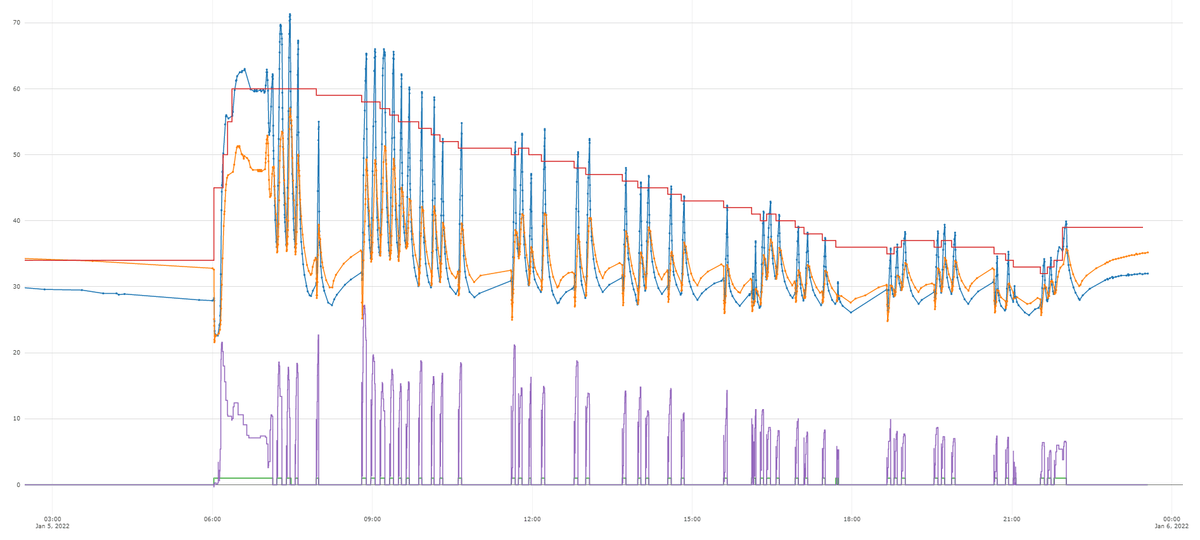
Refining
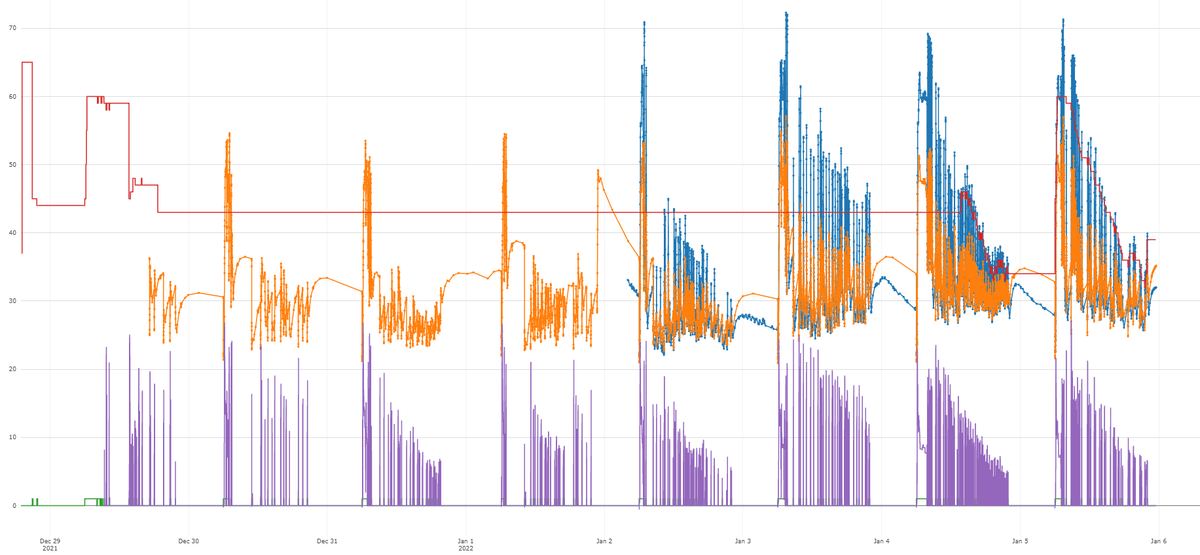
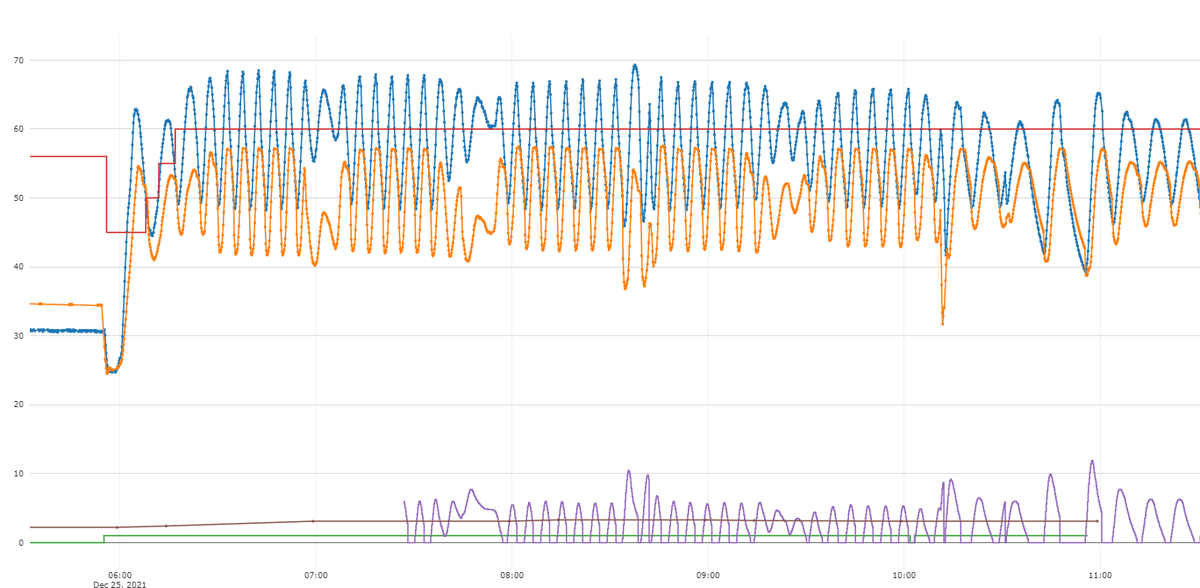
Working Nicely
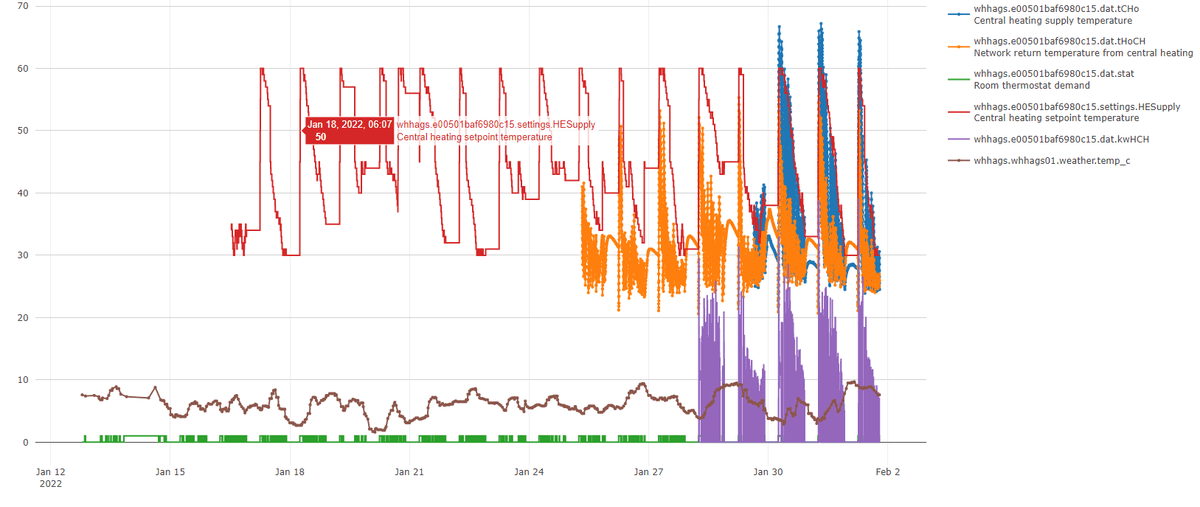
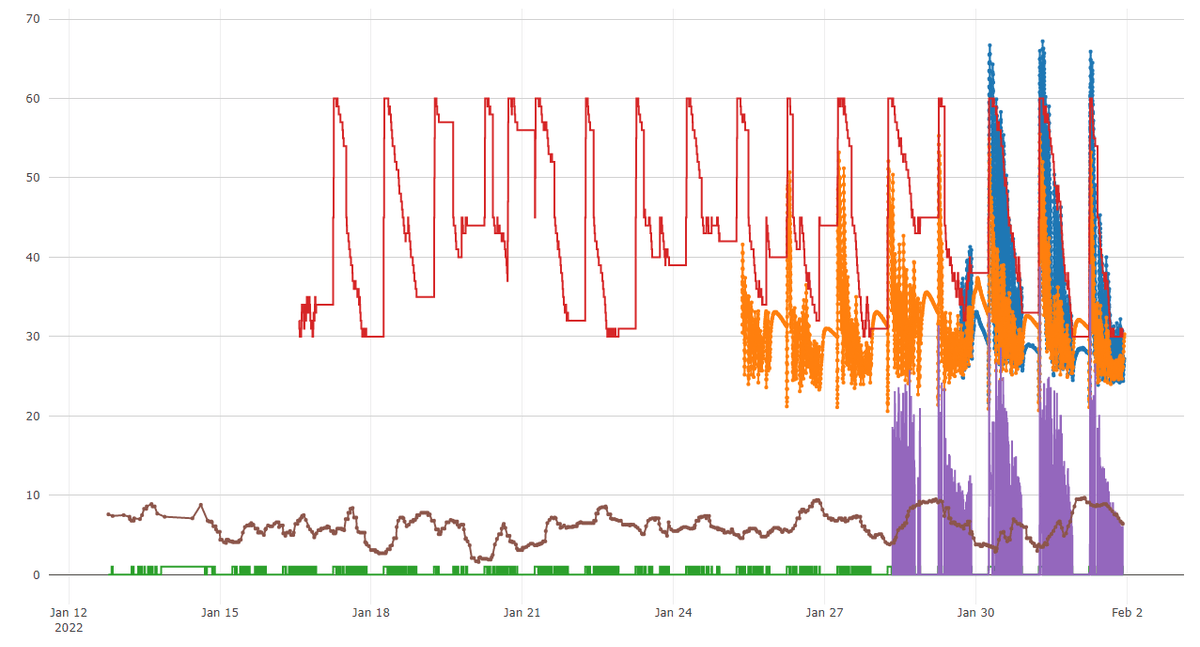
The room thermostat is calling regularly, meaning it is around setpoint at all times of steady operation.
The average return temperature is reduced from the initial 65C to 35C, even with the initial daily startup where return temperatures are higher.
Green: Room Stat
Red: CH Setpoint
Brown: Outside Temperature
Results
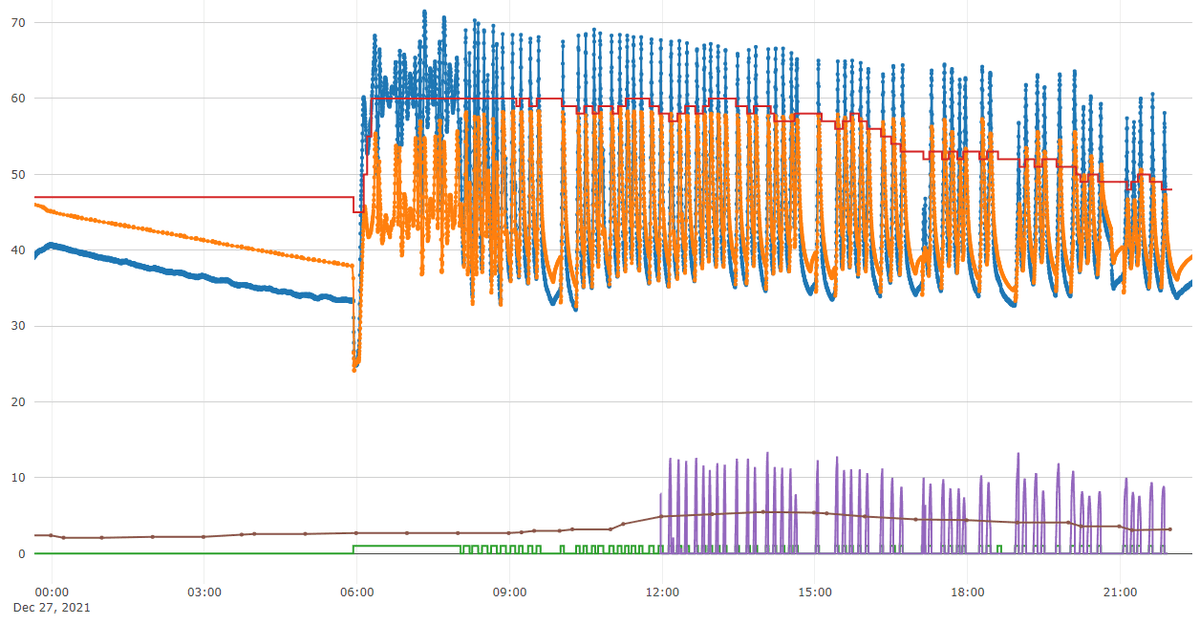
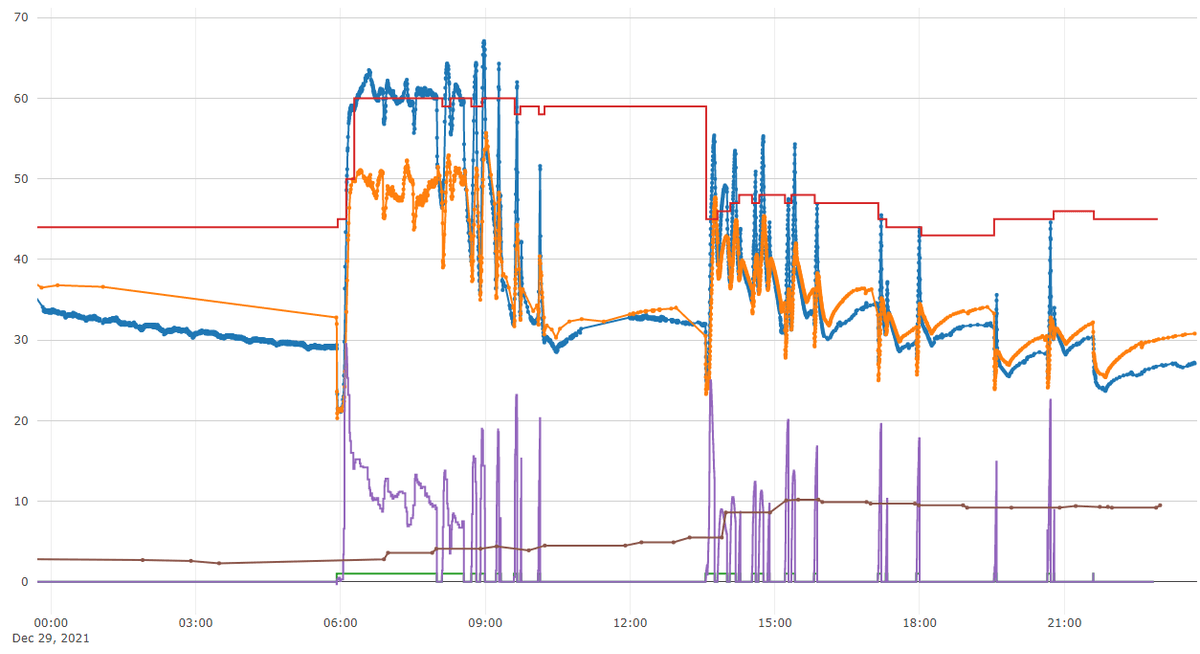
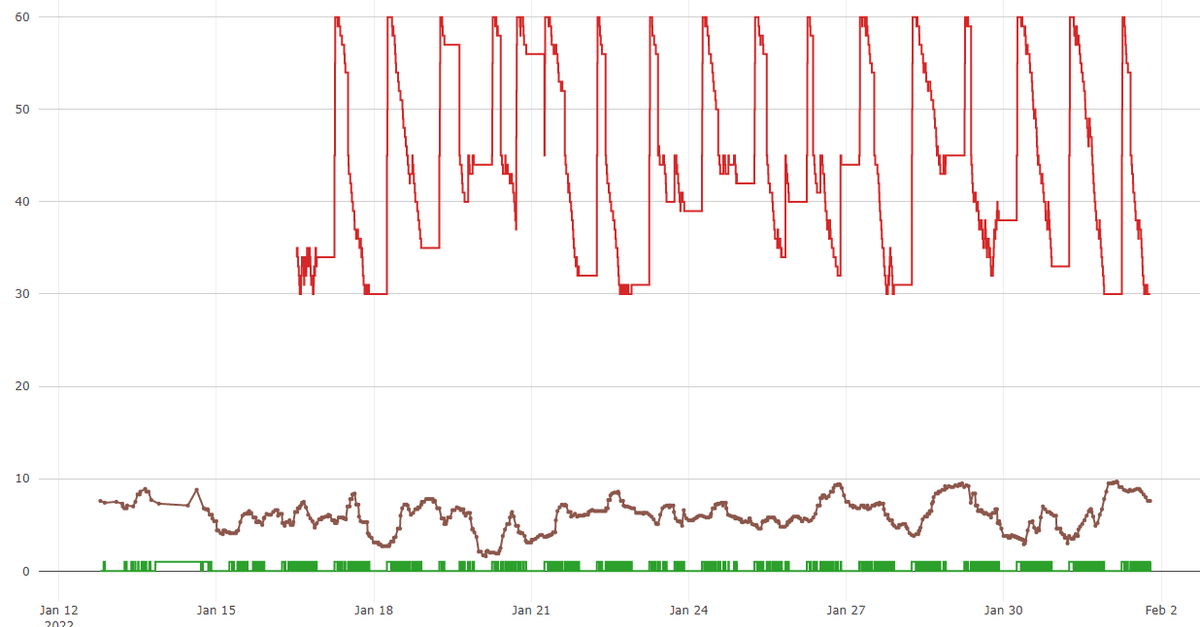
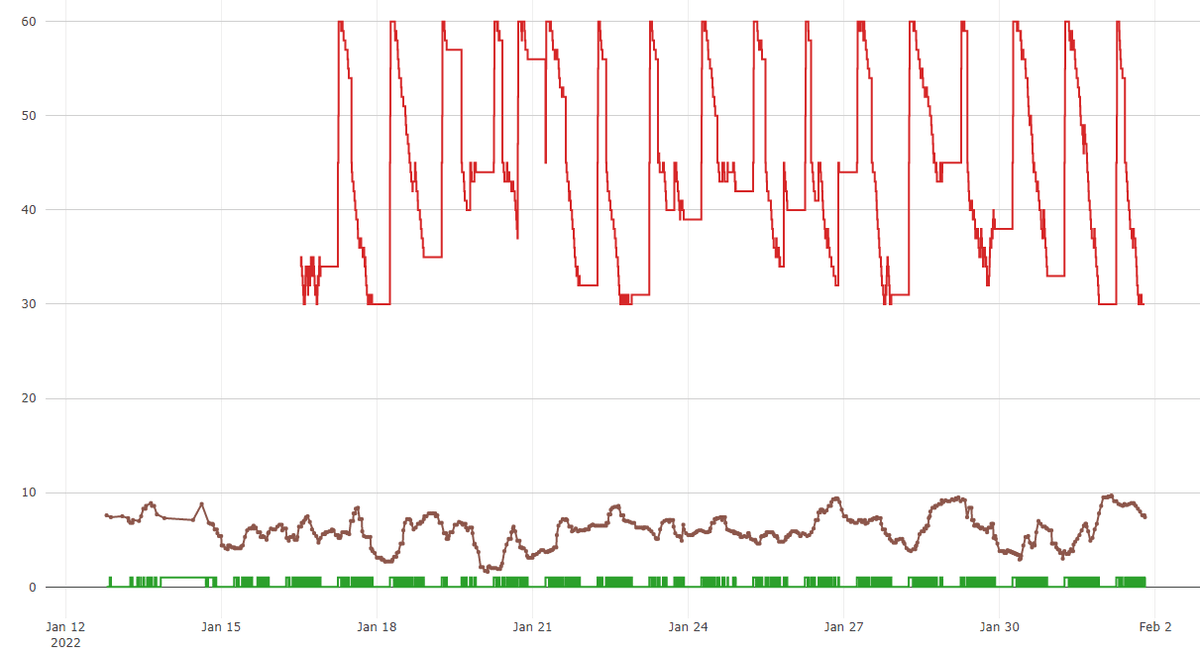
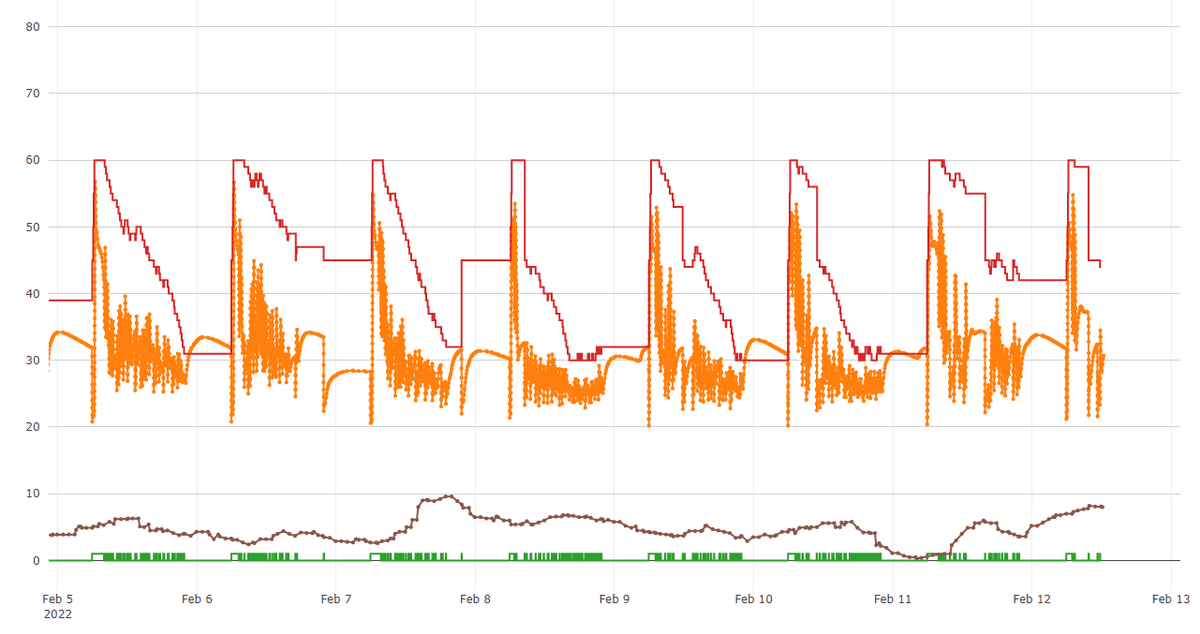
The room thermostat is calling regularly. The average return temperature is reduced from the initial 65C to 35C.
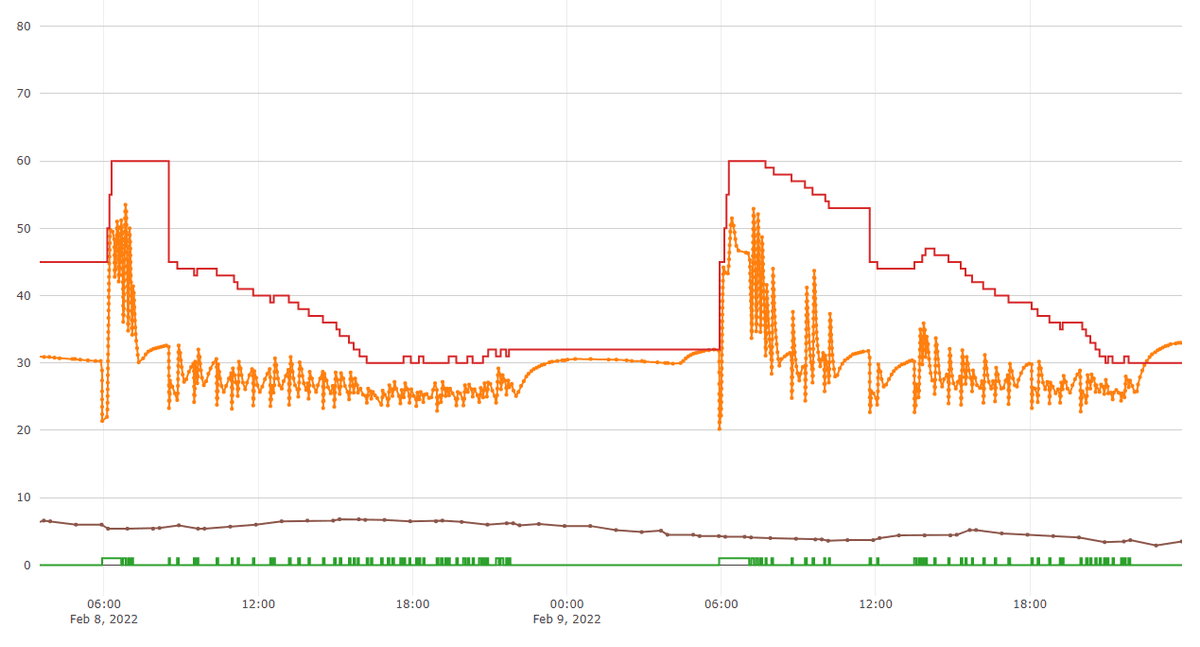
The initial daily startup allows temperatures to run higher to achieve setpoint quickly. The initial temperatures is regulated a little to prevent overshoot.
This data details over a week of operation, with outside temperatures between 0C and 10C throughout. The heating is maintained throughout with low VWART performance.
Radiators have not been touched at any stage and sit at the original 10C balancing. All updates have been remote on HIU logic.
Green: Room Stat
Red: CH Setpoint
Brown: Outside Temperature
Orange: Network Return Temperature (CH)
Improvements
There is an argument that leaving heating on constantly overcomes the morning surges in heating demand. That is undoubtable.
However, whether this translates to net gain on energy is open to further analysis. Heat is saved by having no load for significant periods. And some people like it colder overnight.
From the data so far it would appear beneficial to at least have a startup period, where heating ramps up slowly. This can be achieved in two ways:
- Set programmable room thermostat to come on earlier at a lower temperature (e.g. 17C), with a change to user set temperature (e.g. 21C) at normal start time.
- Use an Optimum Start function on the room thermostat, which should learn to come on earlier as we limit startup temperatures.
A further improvement can be seen from the data. It is clear that a return temperature of 35C would suffice, certainly if radiators were balanced to a higher temperature drop.
Fitting Return Temperature Limiting valves to each radiator (TRVs no longer required) would allow flow temperatures to be raised initially without sacrificing return temperatures.
It is also clear from the data that even with RTL valves there is gain to be had in reducing return temperatures below their 35C limits. A combination of Chrono-Compensating control and RTL valves would offer the best solution.
Comparison